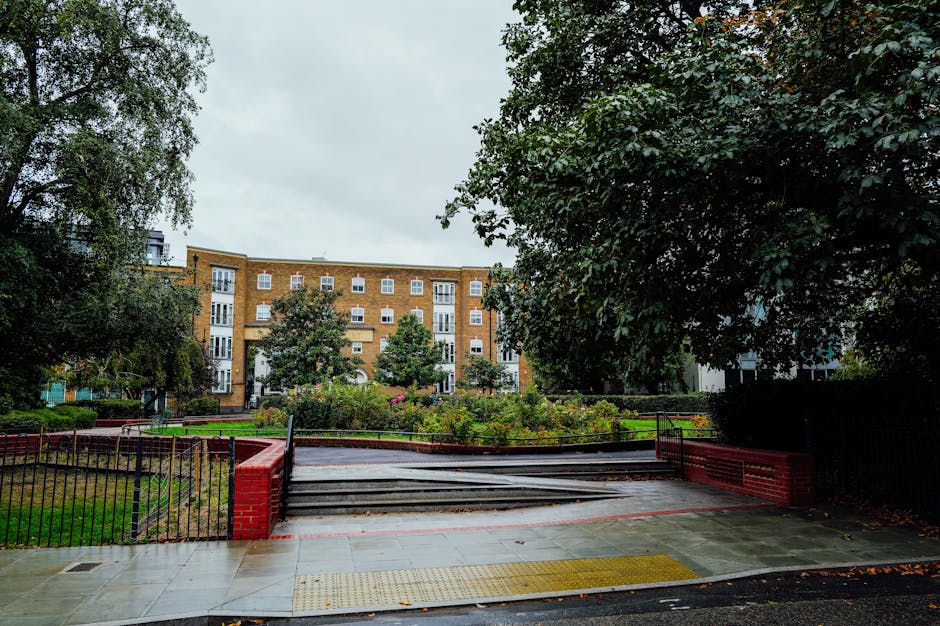
What to know about access issues for gardeners in Wood Green flats
If you live in a flat in Wood Green, you already know the small things can become the big things. A narrow stairwell, a coded gate that does not quite work, bins left where they should not be, or a garden tucked behind three locked doors can turn a simple visit from a gardener into a bit of a puzzle. That is exactly why What to know about access issues for gardeners in Wood Green flats matters before anyone starts trimming, mowing, clearing, or redesigning anything.
In practical terms, access affects how quickly a gardener can work, what tools they can bring, how safe the job is, and whether the result matches what you were hoping for. It also affects pricing and scheduling, though not always in obvious ways. Below, we will walk through the common access problems, how good gardeners plan around them, and what you can do to make the whole process calmer and more efficient. Honestly, a little preparation goes a long way.
Why access issues matter in Wood Green flats
Flat gardening sounds straightforward until the first visit. Then reality shows up with a wheelbarrow. Access issues can change the whole shape of a job, especially in apartment blocks where the garden may be at the back of the building, on a shared terrace, or inside a courtyard with restricted entry.
For gardeners, access is not just about getting through a door. It includes where they can park, whether tools can be carried safely, how far materials must be moved, whether there is lift access, and if residents or building managers have set quiet hours or shared-space rules. Miss one of those details and you can end up with delays, awkward conversations, or work that has to be split across multiple visits.
That matters to you for two reasons. First, it affects the quality of the work. Second, it affects how smoothly the whole thing feels. If a gardener spends twenty minutes trying to get into the rear communal area, that is twenty minutes not spent actually improving the space. Simple enough, really.
There is also a trust issue. A good gardener will want to know access details in advance because it helps them quote properly and arrive prepared. If they are asking sensible questions about gates, stairs, entry codes, or lift restrictions, that is usually a good sign rather than an annoying one. It means they are thinking ahead.
If your project is part of broader garden care, you may also want to look at garden maintenance services, especially if your flat garden needs regular visits rather than a one-off tidy-up.
How access planning works in practice
Access planning usually starts before the booking is confirmed. A gardener will want to understand the site, the route in, and the nature of the job. That may happen through photos, a quick call, or a site visit. Sometimes all three. A little old-fashioned? Maybe. But it works.
In a Wood Green flat, the biggest access questions often include:
- Is the garden front-facing, rear-facing, or on a balcony or terrace?
- Is entry through a communal hallway, side passage, or shared gate?
- Are there keys, fobs, codes, or intercom systems to manage?
- Can a van park close enough for unloading?
- Are there stairs, narrow paths, or level changes to carry equipment through?
- Is there enough space for waste sacks, branches, or cuttings to be moved out safely?
Once those details are clear, a gardener can choose the right tools and plan the visit more realistically. For example, a compact mower or lightweight battery tools might be more suitable than bulky petrol kit if access is tight and carrying equipment upstairs is unavoidable. Likewise, a clearance job may need bags rather than a wheelbarrow if the route is awkward.
Access can also affect the order of work. A hedge trim might need to happen before lawn mowing if cuttings could block a narrow path. A clearance may need to come before planting or landscaping. In a shared setting, timing matters too. Noise-sensitive jobs may be better done at quieter hours, especially if neighbours work from home or windows sit directly over the garden. Let's face it, nobody loves a leaf blower at 8 a.m.
If you are comparing wider service options, the services overview is a useful place to understand what kinds of work can be adapted to tighter access.
Key benefits and practical advantages
It may sound like admin, but getting access right has real benefits. The first is efficiency. A job that starts cleanly usually finishes cleanly. The second is safety. The third is cost control. All three matter, especially in flats where the layout itself can create little bottlenecks.
Key advantages of planning access properly:
- Less disruption to neighbours, residents, and building staff
- Faster jobs because tools, waste, and workers can move efficiently
- Better quotes because the work scope is based on reality, not guesswork
- Lower risk of damage to walls, floors, communal doors, or planting areas
- Cleaner outcomes because the gardener can bring the right equipment and bag waste properly
- Less stress for you on the day
There is also a hidden benefit: better communication. Once everyone understands the route in, what can be used, and what cannot, the job becomes more collaborative. In our experience, that tends to produce better results than simply saying, "the garden is out the back somewhere." Helpful? Not really.
For bigger jobs where the access route also affects waste movement, you may find it useful to consider garden clearance if the space needs a proper reset rather than a quick tidy.
And if shared surfaces or pathways are fragile, planning ahead can help the gardener avoid scuffs, broken pots, or soggy footprints through communal areas. Small details, yes. But those are often the ones people remember.
Who this is for and when it makes sense
This is relevant for anyone in a flat who wants outdoor space maintained without drama. That could mean a private patio, a small courtyard, a balcony garden, a roof terrace, or a communal garden that residents are responsible for keeping tidy.
It makes sense if you are:
- a tenant who wants to keep a balcony or small garden manageable
- a leaseholder responsible for a private external space
- a landlord preparing a flat for viewings or new occupants
- a managing agent arranging work in shared outdoor areas
- a resident who needs occasional maintenance after months of growth
It is also relevant if you have accessibility needs yourself. For instance, some residents can open the main entry but cannot carry tools down several flights of stairs. In those cases, a gardener may need to bring more compact equipment or arrange extra help. That is not awkward. It is simply planning for reality.
Access questions matter most when:
- the job involves heavy waste removal
- the route passes through communal indoor areas
- the building has strict time windows for contractors
- parking is limited or distance from the van is significant
- the garden is hidden behind multiple entry points
If your flat has more complex outdoor design elements, such as raised sleepers, decking, or decorative borders, you may also want to review decking services and landscaping options to see how access might influence the scope of work.
Step-by-step guidance
Here is the simplest way to handle access issues without overcomplicating things.
- Describe the access route clearly. Say whether the garden is front, rear, communal, roof-level, or balcony-based. Mention gates, stairs, lifts, codes, and narrow paths.
- Share photos if possible. A few phone photos can save a lot of back-and-forth. Include the route from the street or entrance to the garden itself.
- Flag restrictions early. Let the gardener know about parking limits, noise-sensitive neighbours, locked access points, and any times when access is not available.
- Check what the job involves. Mowing, hedge trimming, clearance, tree work, and landscaping all place different demands on access. A small weeding visit is not the same as a full cut-back.
- Confirm who will provide access. If you are not on site, name the person who can open doors, hand over keys, or meet the gardener.
- Ask how waste will be handled. This is a big one. If garden waste needs to pass through tight communal spaces, the gardener may need sacks, tubs, or staged collection.
- Agree the plan in writing. A simple message confirming the access route, arrival time, and any building rules can save confusion later.
That last bit sounds slightly dull, maybe, but it is the sort of dull that prevents headaches. And honestly, that is a win.
If the job is purely routine, lawn mowing can often be adapted to tight access as long as the route and storage of equipment are sorted in advance. For hedge-heavy spaces, hedge trimming is another service where the path in and out matters more than people expect.
Expert tips for better results
Good access planning is partly about detail, and partly about judgement. A few practical tips can make a big difference.
1. Think like the person carrying the tools. If a gardener has to carry a mower, bags, shears, or pruning kit through a narrow hallway, ask yourself whether that is realistic and safe. If it feels awkward to you, it will probably feel awkward to them too.
2. Keep communal areas clear on the day. A child's scooter, recycling bin, or folded buggy in the wrong place can turn a straightforward route into a clumsy shuffle. Clear the route the night before if you can.
3. Use compact tools where the site demands it. Not every job needs large equipment. In flat gardens, lighter battery tools are often more suitable than heavy machinery, particularly when noise and carrying distance matter.
4. Build in a little extra time. Access in flats often takes longer than access to a detached house. Not always, but often enough. A few extra minutes for entry and set-up is normal.
5. Be honest about the condition of the space. If the garden is heavily overgrown, waterlogged, full of debris, or piled with old pots, say so. Surprise is not a good scheduling strategy.
6. Match the service to the access. A full design project may be more appropriate than simple maintenance if the space is difficult to reach but needs major improvement. A tidy surface can hide a bigger access or layout problem underneath.
Here is a small but useful truth: gardeners would rather know a slightly messy reality than arrive to a polished description that does not match the site. It is far less awkward to say, "the gate sticks and the lift is tiny," than to hope nobody notices. They will notice.
Common mistakes to avoid
Most access problems are not disasters. They are just preventable. The most common mistakes are usually the simple ones.
- Leaving access to be sorted on arrival. This creates delays and can push the job into a second visit.
- Forgetting about waste removal. A tidy-up job can suddenly become much harder if bags and cuttings have nowhere easy to go.
- Assuming all flat gardens are the same. A second-floor terrace and a ground-floor communal courtyard are very different jobs.
- Not checking building rules. Some blocks have contractor hours, door codes, or rules about equipment movement. Best know before, not after.
- Underestimating noise. Quiet courtyard spaces can echo more than you expect. A tool that seems modest outdoors can sound quite sharp between brick walls.
- Ignoring parking or loading distance. If the van must park far away, the job may take longer or need different planning.
One more thing: do not assume a gardener will mind making it up as they go along. Good professionals usually can adapt, yes, but that does not mean they enjoy surprises. Nobody does.
Tools, resources and recommendations
You do not need a box of specialist equipment to sort access issues, but a few practical tools help a lot.
Useful things to have ready:
- photos of the entrance, route, and garden area
- door codes or instructions for key access
- basic notes on parking and loading
- a simple map sketch if the route is confusing
- confirmation of any building restrictions
From the gardener's side, compact tools, dust sheets, heavy-duty bags, gloves, and a clear loading plan make a big difference. For larger or more complex sites, a gardener may also need trolleys or additional carrying gear. The exact kit depends on the job, but the principle is the same: reduce friction wherever possible.
Where access is difficult and the work involves more than routine maintenance, it may help to compare service options through regular maintenance, clearance work, or broader landscape gardening. The right choice depends on whether the space needs upkeep, a reset, or a redesign. Different jobs, different access needs.
If you are working with shared outdoor space, it is also smart to check the company's approach to health and safety and insurance and safety. That is not red tape for its own sake. It is about knowing that ladders, tools, and movement through shared areas are handled properly.
Law, compliance, standards, or best practice
Access in flat gardens can touch on property rules, neighbour considerations, safety expectations, and sometimes building management requirements. The exact position depends on the property type and the contract or lease arrangements in place, so it is wise to be cautious rather than assume.
At a practical level, best practice usually includes:
- keeping communal hallways and entrances clear
- avoiding unnecessary disruption to neighbours
- using tools safely in shared spaces
- managing waste without obstructing exits or access routes
- confirming who is responsible for authorising entry
If a job involves tree work, heavier cutting, or anything that could create extra risk, the gardener should work in line with sensible safety procedures and use proper judgement about whether the access route is suitable. For anything more involved than standard maintenance, especially where ladders, branches, or awkward carrying routes are involved, it is better to ask the question early.
You may also want to read the company's accessibility statement, which can help you understand how accessibility and site access are approached. If a dispute ever arises, the complaints procedure is another useful reference point.
For payment, quote handling, or service terms, it helps to review pricing and quotes and the terms and conditions so expectations stay clear from the start. That sounds dry. It really is worth it, though.
Options, methods, or comparison table
Access challenges are handled differently depending on the garden and the type of work. Here is a simple comparison that may help you decide what is most suitable.
| Access situation | Best approach | Typical challenge | Notes |
|---|---|---|---|
| Ground-floor patio behind a shared gate | Standard visit with clear entry instructions | Gate codes and shared-route timing | Usually straightforward if the route is kept clear |
| First- or second-floor terrace | Compact tools and lighter carrying plan | Stairs, lifts, and repeated trips | Waste handling needs extra thought |
| Communal courtyard garden | Scheduled access with building awareness | Neighbour disruption and shared spaces | Quiet working windows may matter |
| Overgrown rear garden with narrow passage | Clearance-first approach | Blocked route and bulky cuttings | A one-off reset often works better than routine mowing |
| Balcony garden | Light maintenance and controlled tool use | Limited space and weight limits | Design choice matters as much as maintenance |
The main point? Match the method to the reality of the site, not the other way around. A balcony does not want the same treatment as a courtyard, and a courtyard is not the same as a hidden rear plot with awkward access. That sounds obvious, but it gets overlooked all the time.
Case study or real-world example
Here is a simple real-world-style example from a typical flat setting in Wood Green.
A resident wanted help with a small rear garden behind a converted building. The space itself was not large, but access was awkward: entry through the main door, along a narrow corridor, then out through a side gate that stuck in wet weather. The garden had a patchy lawn, a few tired shrubs, and a pile of cuttings from an earlier DIY attempt. Nothing dramatic, just a bit neglected.
Before the visit, the resident sent photos of the gate, the route, and the rear space. That let the gardener bring lighter equipment, extra sacks, and a plan for moving waste in stages rather than all at once. The job was split into clean-up, hedge reduction, and lawn work. Because the access route had been mapped properly, there was no awkward pause on the day, no guesswork, and no unnecessary damage to the corridor or gate frame.
The resident's main reaction afterwards was relief. Not excitement, exactly. Relief. Which, in flat-garden work, is often a pretty good sign. Everything felt easier because the access was treated as part of the job, not a side note.
If the space had been even more tangled, the gardener might have recommended tree lopping and removal or a more extensive clearance first, then moved to maintenance later. That sequence can save time and reduce repeated disruption.
Practical checklist
Use this quick checklist before booking a gardener for a flat in Wood Green:
- Have I explained exactly how the gardener gets to the garden?
- Have I mentioned codes, keys, lifts, or locked gates?
- Have I checked whether parking or unloading is realistic?
- Have I shared photos of the route and the garden?
- Do I know whether the work is maintenance, clearance, trimming, or landscaping?
- Have I warned about narrow corridors, stairs, or shared entrances?
- Have I told the building manager or neighbours if access may affect them?
- Do I know how waste will be removed from the site?
- Have I reviewed the service terms and quote details?
- Is there anything fragile, fixed, or easy to damage along the route?
Practical summary: if you can answer those ten points, you are in a much better position to get a smooth visit, a fair quote, and fewer surprises on the day.
If you are still unsure, it is often best to ask for help early rather than waiting until the day of the job. That little bit of honesty saves time, and usually money too.
Conclusion
Access issues for gardeners in Wood Green flats are not just about getting through a door. They shape the whole job: the tools, the timing, the waste removal, the safety, and the final result. When access is planned properly, even a tricky flat garden can be transformed without fuss. When it is ignored, a simple job can become one of those mildly exhausting experiences everyone wants to avoid.
The good news is that most access problems are manageable. Clear communication, a few photos, honest detail, and the right service choice will handle most of it. And if your garden is small, awkward, or shared, that is fine. Those spaces can still look excellent with the right approach.
Get a free quote today and see how much you can save.
For more about the company behind these services, you can also visit about us or use the contact page if you are ready to talk through your space. A calm, well-planned start makes a real difference, and sometimes that is the whole story.
Frequently Asked Questions
What are the most common access problems for gardeners in Wood Green flats?
The most common ones are locked gates, narrow stairwells, limited parking, shared hallways, lift restrictions, and awkward waste removal. In flat settings, it is often the route in and out that causes the trouble, not the garden itself.
Do I need to provide photos before the gardener visits?
It is not always required, but it is very helpful. Photos of the entrance, route, and garden area can prevent misunderstandings and help the gardener bring the right tools. A few phone pictures usually do the job.
How do gardeners usually handle access to communal gardens?
They normally work around building rules, arrange entry in advance, and keep movement through shared areas as tidy and brief as possible. If there are restrictions, those need to be known before the visit so the job can be planned properly.
Can a gardener work in a flat garden with no direct parking nearby?
Yes, often they can. But the job may take longer and may require a different setup. If parking is far away, carrying tools and waste becomes part of the planning, and that can affect the quote or visit length.
What should I tell a gardener about balcony access?
Tell them the width of the entrance, whether there are stairs or a lift, any weight limits or building rules, and whether the balcony can safely take larger tools or waste bags. Balcony work usually needs a lighter, tidier approach.
Does access affect the price of garden work?
It can. Difficult access may mean more time, more carrying, or more careful equipment choices. That does not always mean a higher price, but it can change the quote if the work is more labour-intensive than it first appears.
What if the gardener cannot get through the route I described?
That is why clear details matter. If the route turns out to be tighter than expected, the gardener may need to adjust the method, reschedule, or refine the quote. It is better to find that out before the work begins.
Should I check building rules before booking?
Yes, absolutely. Some buildings have contractor hours, noise rules, or access procedures for communal areas. A quick check now can avoid awkward delays later. Tiny admin task, big payoff.
Are there safety issues with moving tools through communal spaces?
There can be. Tools, bags, and plant waste need to be handled carefully to avoid damage or hazards. That is why it helps to choose a gardener who plans access properly and works in line with sensible safety practice.
What service is best if the garden is badly overgrown and hard to reach?
Often a clearance-first approach is best. If the route is awkward and the garden has become heavily overgrown, a full tidy or clearance may be more practical than standard maintenance at the start.
How far in advance should I discuss access details?
As early as possible. Ideally, mention access details when you first ask for a quote. That gives everyone time to think through parking, entry, waste removal, and the right equipment for the job.
What if I have mobility issues and cannot manage the entrance myself?
Say so early. A good gardener can often adapt the visit, for example by coordinating arrival, using lighter tools, or agreeing a different handover point. Being upfront is the easiest way to make the job workable.
Can access problems affect which gardening services are suitable?
Yes. A tight flat-access route might suit mowing or light maintenance, while a more awkward or cluttered setup may need clearance or landscaping support first. The access route often shapes the service choice more than people expect.